Fitness Class Format Comparison for Trainers
A European trainer guide comparing class formats, functional fitness, cross-training skills, and when to expand beyond personal training.
Short answer
Fitness class formats differ by energy system, equipment, coaching style, group size, risk level, and member expectation. Personal training, functional fitness, HIIT, strength, pilates, yoga, barre, cycling, boxing, and mobility all require different teaching signals.
For European instructors, comparing formats helps you choose better certifications, market yourself clearly on Fitgig.eu, and expand beyond one-to-one personal training when the opportunity is right.
What is functional fitness class
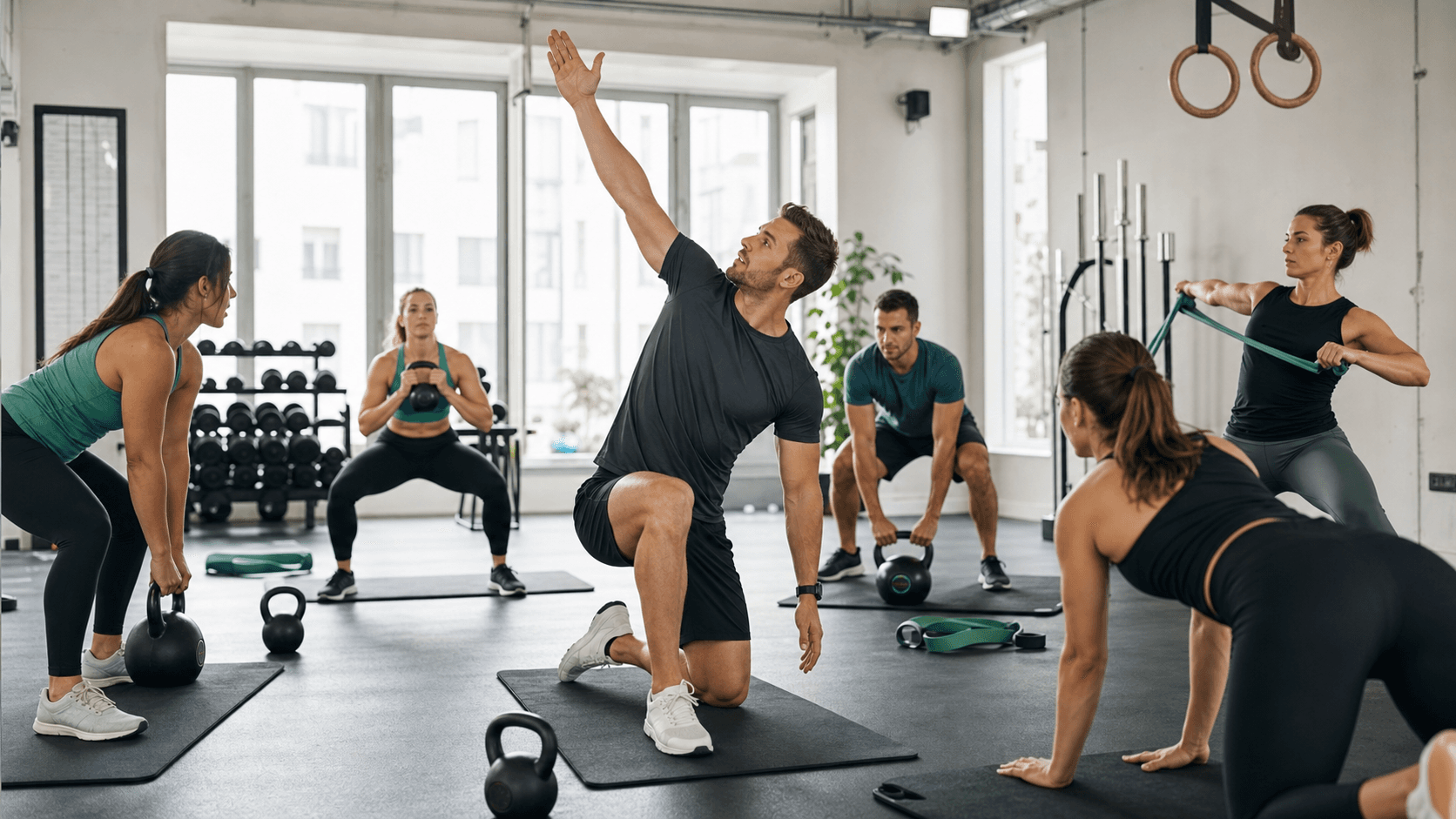
A functional fitness class usually trains movement patterns rather than isolated muscles: squat, hinge, push, pull, carry, rotate, brace, jump, crawl, and change direction. It may use kettlebells, dumbbells, bands, boxes, sleds, bodyweight, and mobility drills.
Good functional fitness is not random hard exercise. It is structured movement training with clear progressions, regressions, coaching, and safety awareness.
Benefits of cross-training instructor skills
Cross-training instructor skills make you more useful to studios. A trainer who understands strength, mobility, pilates principles, conditioning, and class flow can adapt to more timetable needs.
This does not mean pretending to be qualified for everything. It means building real competence across adjacent formats and being clear about your scope.
Why expand beyond personal training
Personal training can be rewarding, but group formats can add income stability, studio relationships, visibility, and new career options. Teaching classes can also sharpen cueing, energy management, and programme design.
In European cities where boutique studios are growing, trainers who can teach both one-to-one and group formats often have more flexible careers.
Compare formats by studio need
Do not choose formats only because they are popular online. Choose formats that match your training, personality, local market, and the studios you want to work with.
- HIIT and cycling need energy, timing, and group control.
- Pilates and yoga need precision, progressions, and calm authority.
- Strength and functional fitness need technique, safety, and scalable programming.
- Barre and mobility need rhythm, detail, and member experience awareness.
- Boxing-inspired classes need strong boundaries around safety and skill level.